

The Cult of Continuous Motion
As we mark Global Wellness Day in 2026, the corporate landscape finds itself at a critical juncture. Despite an unprecedented influx of wellness apps, ergonomic desk chairs, and seminars on resilience, employee burnout remains stubbornly high. The root of this paradox lies not in a lack of resources, but in a fundamental flaw in modern work culture: the glorification of continuous motion. We have built workplaces that prize velocity over clarity, volume over value, and perpetual busyness over strategic rest.
In this environment, the concept of taking a break is often viewed with suspicion. It is treated as an indulgence, a temporary lapse in productivity, or a necessary evil to be squeezed into the margins of the day. We eat lunch at our keyboards, take conference calls during our commutes, and wear our exhaustion as a badge of honour. But this relentless forward momentum is biologically and psychologically unsustainable. The human brain and nervous system are not designed to operate at maximum capacity indefinitely. They require cyclical periods of exertion and recovery. When we deny this biological imperative, the result is chronic stress, cognitive decline, and, inevitably, burnout.
This Global Wellness Day, it is time for organisations to rethink their approach to employee wellbeing. It is time to move away from reactive interventions and towards a structural necessity: a deliberate, culturally embedded ‘Pause’ Strategy. A Pause Strategy is not about encouraging laziness or diminishing output; it is about optimising human performance by respecting the natural rhythms of the human body and mind.
The Neuroscience of the Pause
To understand the necessity of a Pause Strategy, we must first look at the neuroscience of stress and focus. The modern workplace demands intense, sustained attention, a state heavily reliant on the prefrontal cortex, the area of the brain responsible for complex problem-solving, decision-making, and emotional regulation. However, the prefrontal cortex is an energy-hungry region. Prolonged periods of intense focus deplete its resources, leading to decision fatigue, decreased creativity, and heightened emotional reactivity.
Simultaneously, the constant barrage of emails, notifications, and urgent deadlines keeps the sympathetic nervous system (the ‘fight or flight’ response) in a state of chronic activation. This floods the body with cortisol and adrenaline, hormones designed for short-term survival, not long-term daily operations. Chronic activation of the sympathetic nervous system leads to systemic inflammation, compromised immunity, and severe psychological distress.
The antidote to this state of chronic depletion is the activation of the parasympathetic nervous system, the ‘rest and digest’ response. This activation occurs during periods of genuine rest, allowing the body to clear out stress hormones, repair cellular damage, and consolidate memory and learning. Crucially, this recovery process also engages the brain’s Default Mode Network (DMN). The DMN becomes active when we are not focused on the outside world, when our minds are wandering, daydreaming, or resting. It is within the DMN that lateral thinking, deep creativity, and complex problem-solving occur.
By denying employees the opportunity to pause, organisations are inadvertently sabotaging the very cognitive functions (creativity, strategic thinking, and complex problem-solving) that are essential for business success. A Pause Strategy, therefore, is not a detraction from productivity; it is the physiological prerequisite for it.
What is a ‘Pause’ Strategy?
A Pause Strategy is a comprehensive, leadership-driven framework designed to normalise and enforce periods of rest, recovery, and disconnection within the corporate environment. It goes far beyond simply telling employees to ‘take a break.’ It requires structural changes to how work is designed, managed, and evaluated. A successful Pause Strategy operates on three levels: micro, meso, and macro.
1. Micro-Pauses: Regulating the Daily Rhythm
Micro-pauses are short, deliberate breaks integrated into the daily workflow. They are designed to interrupt the accumulation of stress and prevent cognitive fatigue.
Implementing micro-pauses requires a shift in daily habits. This might involve adopting the Pomodoro Technique (working in focused 25-minute sprints followed by a 5-minute break), implementing a ’50-minute meeting’ rule to ensure back-to-back meetings always have a 10-minute buffer, or actively encouraging employees to step away from their screens for brief, regular intervals.
Crucially, a micro-pause must be a genuine cognitive break. Scrolling through social media or catching up on personal emails does not allow the prefrontal cortex to rest. True micro-pauses involve stretching, breathing exercises, gazing out a window, or simply closing one’s eyes for a few moments.
2. Meso-Pauses: Creating Space for Deep Work and Recovery
Meso-pauses involve larger blocks of time dedicated to disconnection, deep work, and substantial recovery within the working week. The modern work environment is characterised by constant interruption, which severely fragments attention and drives up stress levels.
A meso-pause strategy might involve designating specific ‘no-meeting’ days or half-days across the organisation, providing employees with uninterrupted time for deep, focused work. It also involves establishing clear boundaries around communication: implementing policies that explicitly discourage sending emails or Slack messages outside of core business hours, and respecting the sanctity of the weekend.
Furthermore, meso-pauses can be facilitated through structured, experiential wellness offerings. Providing employees with access to mid-week sound meditation sessions, guided breathwork, or restorative yoga classes offers a profound, facilitated opportunity to down-regulate the nervous system and clear mental clutter.
3. Macro-Pauses: Valuing Sabbaticals and True Disconnection
Macro-pauses operate at the level of weeks or months, encompassing annual leave, mental health days, and sabbaticals. The culture surrounding macro-pauses is often deeply flawed; many employees feel guilty for taking their full leave allowance, or feel pressured to check in and monitor their inboxes while supposedly on holiday.
A robust Pause Strategy requires leadership to aggressively champion true disconnection. This means enforcing the taking of annual leave, cross-training teams so that no single employee is indispensable, and celebrating, rather than penalising, those who completely log off during their time away. It means recognising that long-term employee retention and high-level strategic thinking require substantial periods of extended rest.
The Cultural Shift: Leadership and Permission
Implementing a Pause Strategy requires more than just rewriting the employee handbook; it requires a profound cultural shift. The success or failure of a Pause Strategy ultimately rests on the shoulders of leadership. If the CEO sends emails at midnight, or if middle managers praise the employee who works through the weekend, the Pause Strategy will be viewed as disingenuous corporate lip service.
Leaders must actively model the behaviour they wish to see. They must be visibly seen taking their own micro-pauses, protecting their meso-pause boundaries, and completely disconnecting during their macro-pauses. They must communicate to their teams that resting is not just permitted, but expected and evaluated as a component of professional performance.
Furthermore, evaluating performance must shift from measuring inputs (hours spent at the desk) to measuring outcomes (quality of work and impact). When employees are trusted to manage their own time and are evaluated on their results, they are empowered to take the pauses they need to operate at their best.
Experiencing the Pause: The Role of Sound Meditation
One of the most significant challenges in implementing a Pause Strategy is that many employees have forgotten how to rest. When the nervous system has been chronically activated for years, sitting in silence can feel uncomfortable, even anxiety-inducing. The transition from intense activity to deep rest is not always seamless.
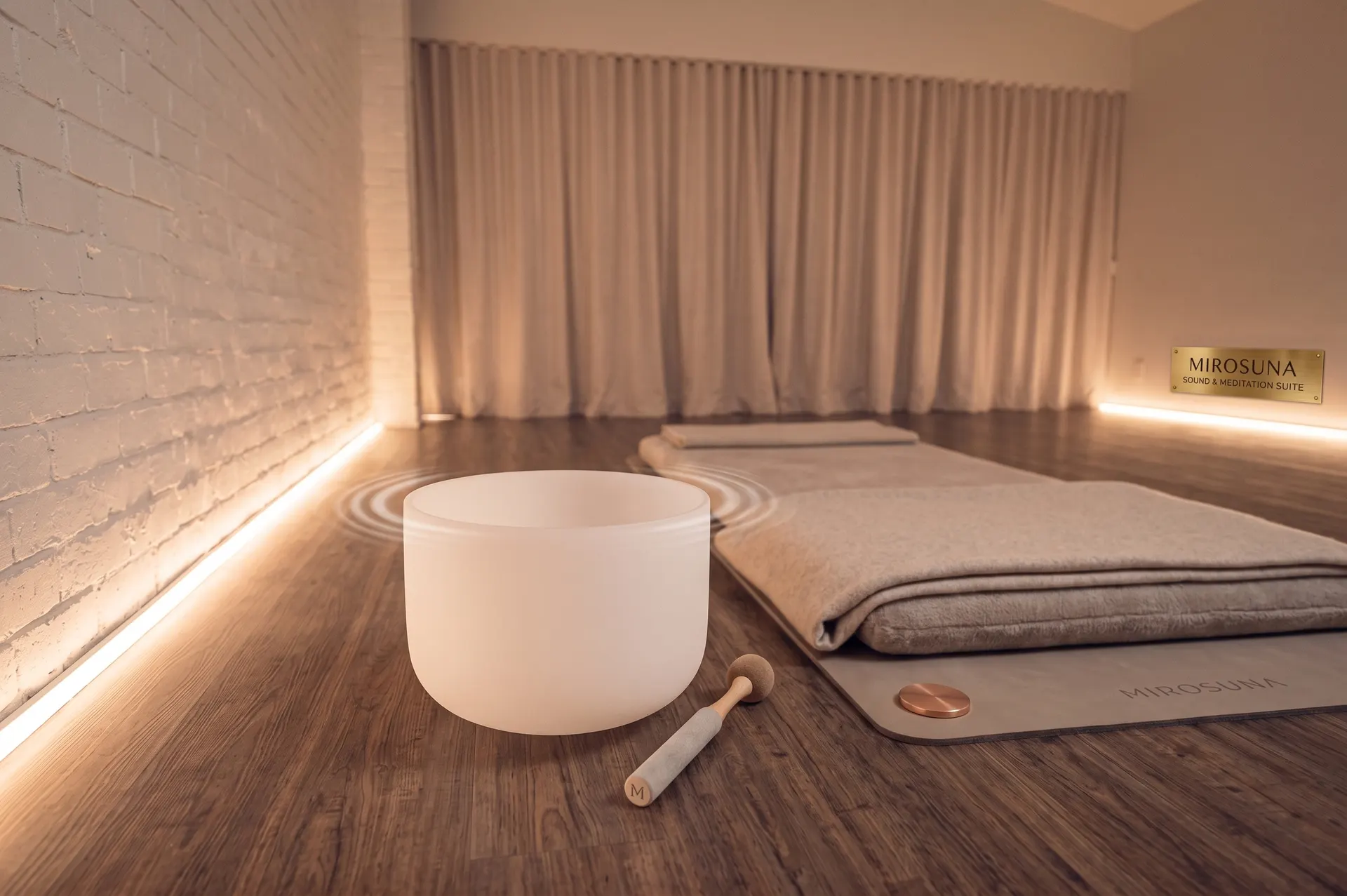
This is where structured, facilitated experiences like sound meditation become invaluable tools within a corporate Pause Strategy. Sound meditation utilises the resonant frequencies of crystal bowls and gongs to gently guide the brain into a state of deep relaxation. It provides a focal point for the mind, bypassing the need for active concentration or previous meditation experience.
For an employee caught in the cycle of continuous motion, a sound meditation session acts as a circuit breaker. It forces the body into a state of profound physiological rest, down-regulating the sympathetic nervous system and allowing the mind to genuinely switch off. Integrating such practices into the corporate calendar provides employees with the practical tools they need to relearn the art of the pause.
The Competitive Advantage of Rest
As we reflect on Global Wellness Day 2026, it is abundantly clear that the future of work cannot look like the past. The organisations that will thrive in the coming decades are not those that extract the maximum number of hours from their employees, but those that cultivate an environment of sustainable, high-level performance.
Implementing a Pause Strategy is not a concession to employee demands; it is a strategic imperative. By respecting the biological rhythms of the human nervous system, by normalising rest, and by actively creating space for recovery, organisations can unlock deeper creativity, sharper focus, and unparalleled resilience within their teams.
The choice is clear: we can continue to worship at the altar of continuous motion, accepting burnout and high turnover as the cost of doing business. Or, we can embrace the power of the pause, and build workplaces that are as sustainable as they are successful.
Is your organisation caught in the cycle of continuous motion? It’s time to implement a strategic approach to rest and recovery. At Mirosuna, we help forward-thinking companies integrate profound, restorative practices into their corporate culture. Elevate your team’s wellbeing and performance by booking a tailored Corporate Wellness program or a transformative Sound Meditation session with us. Contact Mirosuna today to discover how we can help your workplace master the art of the pause.