

The modern workplace is a dynamic and often demanding environment. While ambition and drive are celebrated, the pressure to perform can lead to a significant, yet often overlooked, challenge: workplace stress. Effective stress management in the workplace is no longer a luxury but a critical component of a thriving, productive, and healthy organisational culture.
For Australian businesses, understanding and addressing employee stress is not just a matter of wellbeing, but a strategic imperative for sustainable success.
This guide explores practical and evidence-based techniques to manage stress, fostering resilience and balance for busy teams.
Understanding Workplace Stress in 2026
Workplace stress in 2026 is a multifaceted issue, shaped by the evolving nature of work itself. Recent data highlights the scale of the challenge, with 48% of Australian employees reporting significant stress. This isn’t an isolated phenomenon; Gallup’s 2024 State of the Global Workplace report revealed that stress levels in Australia and New Zealand are a staggering 17 per cent higher than the global average.
The lines between professional and personal life have become increasingly blurred, with remote and hybrid models creating an ‘always-on’ culture. Employees are grappling with digital fatigue from constant connectivity, economic uncertainty impacting job security, and an ever-present pressure to upskill in the face of rapid technological advancement.
These modern stressors compound the traditional pressures of deadlines, targets, and interpersonal dynamics. The result is a workforce that is more susceptible to burnout, disengagement, and mental health challenges than ever before.
Recognising these new dimensions of stress is the first step for organisations aiming to build a supportive and resilient environment.
Is your team at risk of burnout?
Identifying the early warning signs of chronic stress is critical for maintaining a productive and healthy organisational culture. We’ve developed a comprehensive, easy-to-use checklist specifically for Australian HR managers and team leaders to help you spot behavioural, emotional, and physical indicators of stress before they impact your bottom line.
Download the Workplace Stress Checklist
The Physical and Mental Impact of Chronic Stress
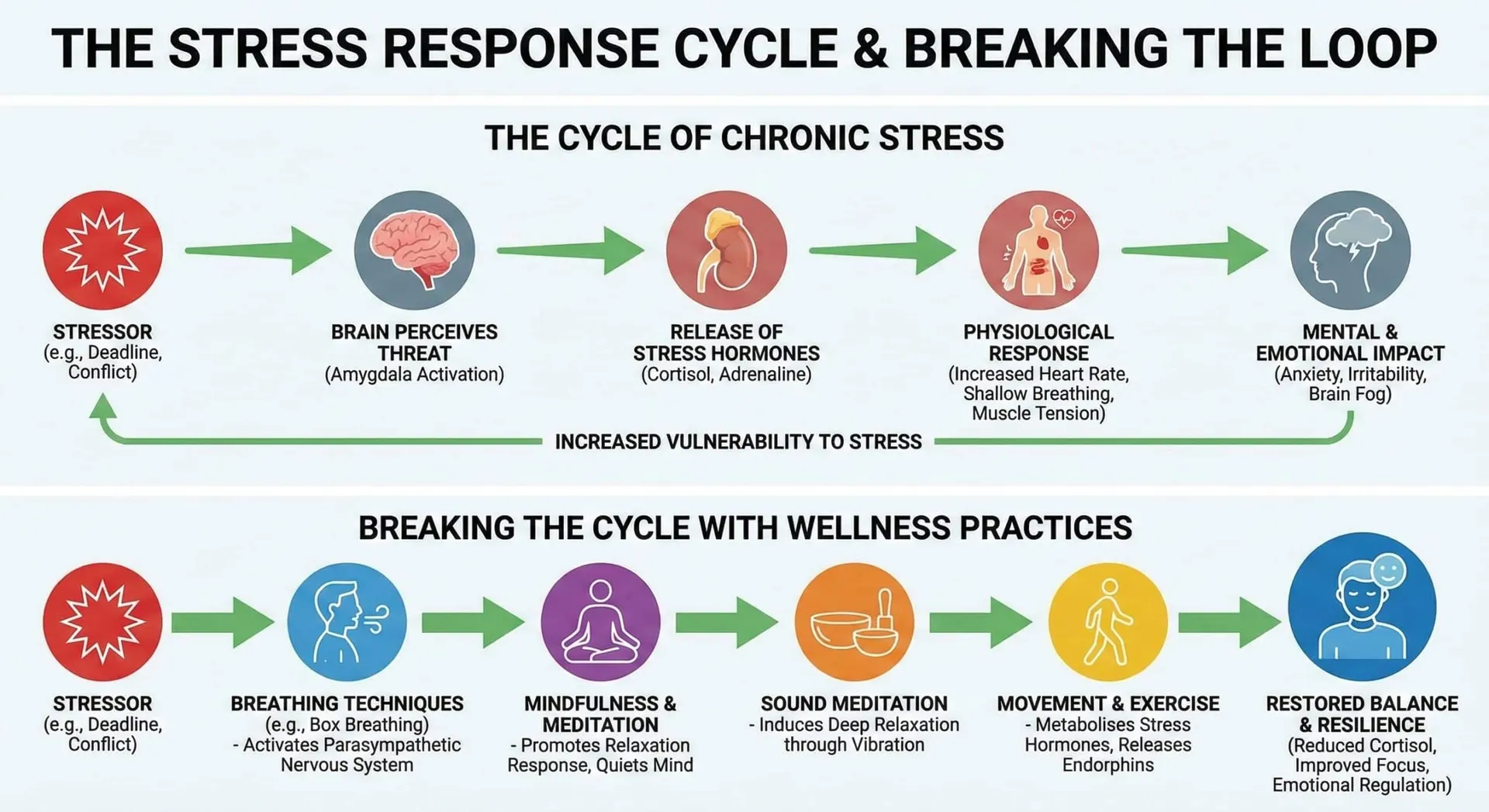
When stress becomes chronic, its effects extend far beyond a bad day at the office. Physiologically, the body’s prolonged exposure to the stress hormone cortisol can lead to a host of problems. These include an increased risk of cardiovascular disease, a weakened immune system, digestive issues, and persistent fatigue.
Mentally and emotionally, the toll is just as severe. Chronic stress is a leading contributor to anxiety and depression, impairs cognitive functions like memory and concentration, and can lead to irritability and social withdrawal.
For a business, this translates into significant tangible and intangible costs. Chronic stress is a direct driver of higher rates of absenteeism, lower productivity, and increased employee turnover. The financial repercussions are immense, with workplace stress costing the Australian economy an estimated $14.81 billion per year. Furthermore, burnout, the state of complete physical, mental, and emotional exhaustion, is estimated to cost Australian businesses $39 billion annually in lost productivity and turnover. Addressing workplace stress techniques is therefore not just about employee perks, but about mitigating significant operational and financial risks. Investing in proactive strategies, such as Mirosuna’s corporate wellness programs, is a direct investment in the financial health and sustainability of the business.
Breathing Techniques for Immediate Relief
One of the most powerful tools for managing acute stress is one we carry with us every moment: our breath. When we are stressed, our breathing often becomes shallow and rapid. Consciously changing our breathing pattern can activate the parasympathetic nervous system, which triggers the body’s relaxation response. A simple yet profound technique is box breathing.
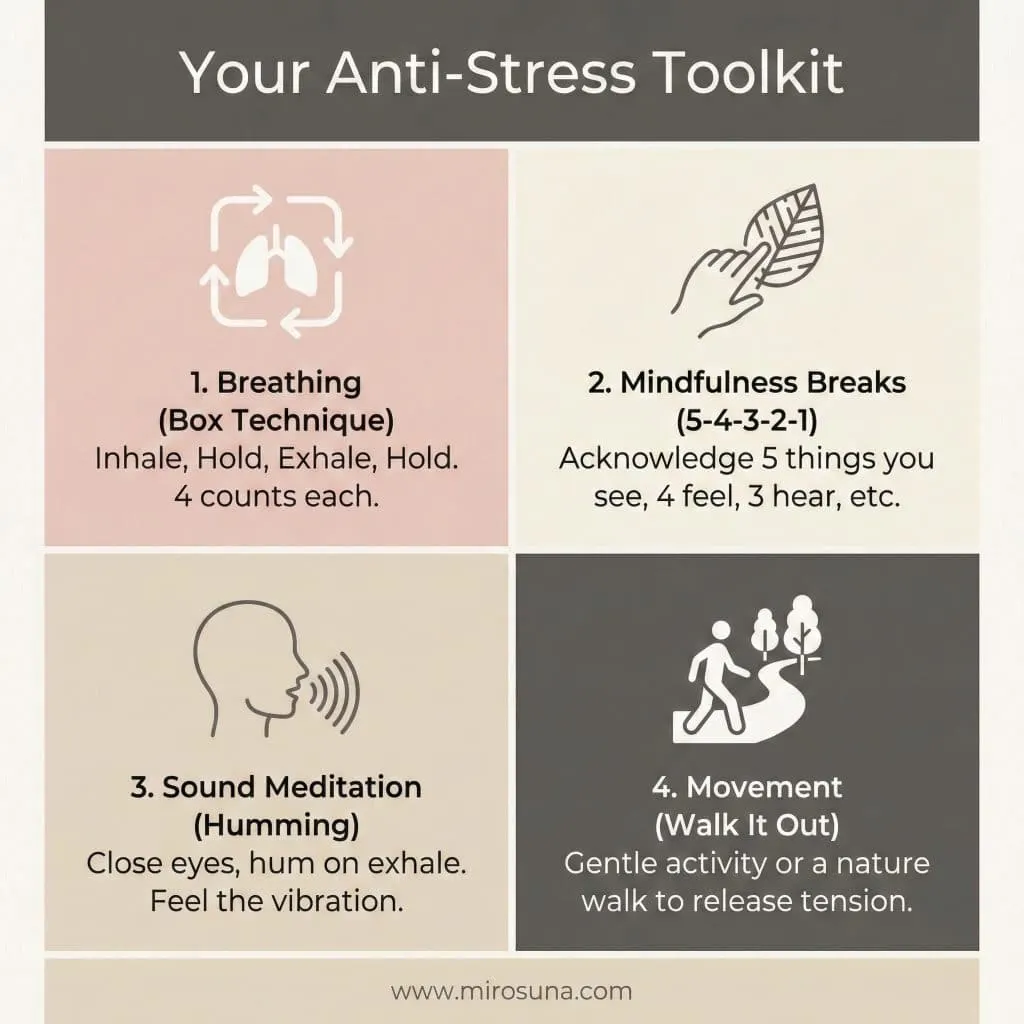
To practice this, you inhale slowly for a count of four, hold your breath for four, exhale for four, and then hold the exhale for four.
Repeating this cycle for just a few minutes can lower your heart rate, reduce blood pressure, and bring a sense of calm and focus.
The beauty of this technique lies in its simplicity and accessibility, making it a powerful tool for how to manage stress at work in real-time. Another effective method is the 4-7-8 technique: inhale through your nose for four seconds, hold your breath for seven seconds, and exhale completely through your mouth for eight seconds.
These exercises can be done discreetly at a desk or before a high-stakes meeting, providing an immediate and accessible way to manage stress at work.
Mindfulness and Meditation at Work
Beyond immediate relief, building long-term resilience to stress requires consistent practice. This is where mindfulness and meditation come in. Mindfulness is the practice of paying attention to the present moment without judgment.
It can be as simple as focusing on the sensation of your feet on the floor or mindfully savouring a cup of tea. Meditation is a more formal practice of training the mind to achieve a state of deep relaxation and inner peace.
Even short, guided meditations can significantly reduce stress levels, improve focus, and enhance emotional regulation. Encouraging employees to take short ‘mindfulness breaks’ or providing a quiet space for meditation can be transformative. By integrating these practices, companies can empower their teams to navigate challenges with greater clarity and composure.
Mirosuna’s corporate wellness programs are designed to embed these skills within your organisation, creating a sustainable culture of wellbeing.
Sound Meditation: A Different Approach to Stress
For those who find traditional silent meditation challenging, sound meditation, often called a sound bath, offers a deeply immersive and accessible alternative. This practice uses resonant instruments like Himalayan singing bowls, gongs, and crystal bowls to create a rich tapestry of sound frequencies. Participants simply lie down and allow the vibrations to wash over them.
The therapeutic sounds help to quiet the mind, release tension, and guide the brain into a state of deep relaxation, similar to meditation. It requires no prior experience and provides a unique sensory journey that can unlock profound stress relief and mental clarity.
As a leading corporate stress management tool, sound meditation is a powerful way to introduce teams to the benefits of meditative practices in a novel and engaging format.
Movement and Stress: The Role of Physical Activity
Our bodies are designed to move, and physical activity is a potent antidote to the physical and mental effects of stress. Exercise helps to metabolise excess stress hormones and release endorphins, the body’s natural mood elevators. It doesn’t have to mean an intense gym session. A brisk walk during the lunch break, a gentle stretching session in the afternoon, or offering standing desks can make a significant difference.
Encouraging ‘walking meetings’ or providing access to online yoga or fitness classes can seamlessly integrate movement into the workday.
By promoting physical activity, companies can help employees release tension, boost energy levels, and improve their overall resilience to stress.
Download the anti-stress toolkit
Creating a Stress-Aware Workplace Culture
Ultimately, individual techniques are most effective when supported by a workplace culture that prioritises psychological safety and wellbeing. This starts with leadership. When managers and executives openly discuss mental health, model healthy work-life boundaries, and encourage open communication, it creates a safe space for employees to seek support. A stress-aware culture is one where workloads are manageable, achievements are recognised, and employees feel a sense of autonomy and purpose. It involves actively listening to employee feedback and co-designing solutions that work for them. Investing in Mirosuna’s workplace wellness solutions is a clear commitment to building such a culture, one that not only manages stress but actively promotes a state of thriving.
When to Seek Professional Support
While self-care techniques and a supportive culture are foundational, it’s crucial to recognise when professional support is needed.
If an employee is experiencing persistent symptoms of stress, anxiety, or burnout that interfere with their daily life, encouraging them to seek help from a GP, psychologist, or counsellor is essential.
Employee Assistance Programs (EAPs) can be a valuable and confidential resource. Normalising the act of seeking professional help is a hallmark of a truly supportive workplace. It signals that the organisation cares for its people as whole individuals, not just as employees, and is committed to their long-term health and wellbeing.
Implementing effective stress management workplace strategies is essential for modern teams. A proactive approach to stress management workplace initiatives can transform your company culture.
Frequently Asked Questions
While traditional deadlines remain, 2026 stressors often include “digital exhaustion” from constant AI-driven notifications and the blurring lines of hybrid work. Many professionals also experience “cognitive overload,” where the pace of information exceeds our natural ability to process it without intentional mindfulness.
Box Breathing is a rhythmic technique where you inhale, hold, exhale, and hold again for equal counts (usually four seconds). It is highly effective because it directly stimulates the vagus nerve, switching the body from a “fight or flight” sympathetic state to a “rest and digest” parasympathetic state.
For optimal mental performance, we recommend the “Micro-Mindfulness” approach: a 2-minute grounding exercise (like the 5-4-3-2-1 technique) every 90 to 120 minutes. This prevents the cumulative buildup of cortisol throughout your workday.
Yes. Techniques like humming or sound baths create internal vibrations that help “reset” the nervous system. These vibrations can lower heart rate and blood pressure, making sound one of the fastest ways to move out of a high-stress “peak” and back into a state of flow.
While both have benefits, gentle movement like walking in nature is often superior for acute stress. High-intensity exercise can sometimes spike cortisol levels further if you are already burnt out, whereas a mindful walk facilitates a “moving meditation” that clears the mind without overtaxing the body.