


In the competitive landscape of modern business, leaders are in a constant search for strategies that provide a sustainable edge. While technology and operational efficiencies are often the primary focus, a critical, human-centric element is frequently underestimated: workplace productivity wellness. For many Australian organisations, a creeping productivity crisis, fuelled by employee burnout, stress, and disengagement, is silently eroding performance.
The solution may not lie in another software implementation, but in a strategic investment in human capital. A growing body of evidence demonstrates that well-designed corporate wellness programs are not just a perk, but a powerful driver of cognitive performance, focus, and overall business output. This article delves into the science-backed connection between employee wellbeing and productivity, offering a clear business case for Australian leaders.
The Productivity Crisis in Australian Workplaces
Australia is currently facing a significant productivity challenge. National productivity growth has slowed to its lowest rate in decades, a trend that has tangible consequences for businesses and their employees. This economic slowdown manifests in the workplace as increased pressure to do more with less, longer working hours, and a pervasive sense of employee fatigue and disengagement. The cost of this disengagement is staggering, with estimates suggesting it drains the Australian economy of billions annually through lost output and innovation.
This crisis is not merely about employees working less hard; it’s about them being less effective. When team members are grappling with high levels of stress, poor mental health, or physical exhaustion, their capacity for deep work, creative problem-solving, and collaboration is severely compromised. This leads to a cascade of negative outcomes, including missed deadlines, a higher frequency of errors, reduced innovation, and ultimately, a direct hit to the company’s bottom line. To reverse this trend, a paradigm shift is required, one that moves from viewing employees as resources to be maximised to seeing them as assets whose wellbeing is integral to organisational success.
The Science: How Wellness Affects Cognitive Performance
The link between wellness and productivity is not a matter of opinion; it is firmly rooted in neuroscience and physiology. Our cognitive performance (the intricate set of mental processes encompassing memory, attention, problem-solving, and decision-making) is directly and profoundly influenced by our physical and mental state. When the body and mind are under duress, the brain simply cannot function at its peak.
High levels of cortisol, the body’s primary stress hormone, have been shown to impair the function of the prefrontal cortex, the brain region responsible for executive functions like planning and focus. Chronic stress can degrade neural pathways and even shrink the hippocampus, a key area for memory and learning.
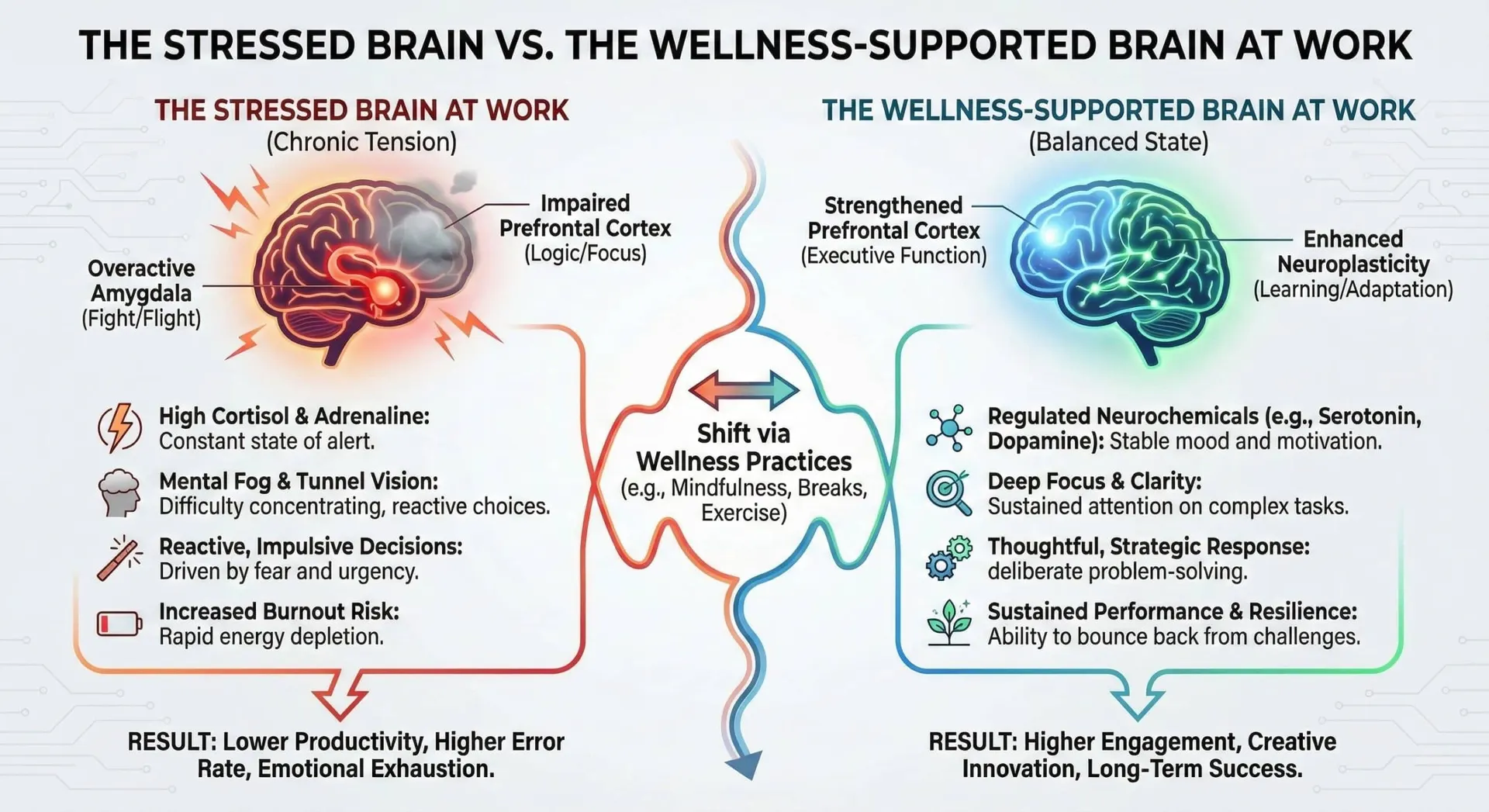
Conversely, activities that promote wellness trigger positive neurochemical responses. Physical exercise boosts blood flow to the brain, delivering vital oxygen and nutrients, while promoting the release of endorphins and brain-derived neurotrophic factor (BDNF), which supports the growth of new neurons. By creating a work environment that actively supports and encourages these wellness practices, organisations can empower their employees to be more mentally agile, creative, and effective.
Meditation and Focus: What the Research Shows
Among the most potent interventions for enhancing cognitive performance is the ancient practice of meditation, now validated by modern science. The core benefit of mindfulness meditation lies in its ability to train the brain’s attention networks. Research consistently shows that regular meditation practice can lead to measurable improvements in sustained attention, selective attention, and executive control. For instance, a landmark study highlighted that even a 20-minute meditation break can increase focus by 14%, a significant gain in a distraction-filled work environment.
Meditation works by strengthening the prefrontal cortex and improving its communication with other brain regions, allowing individuals to better regulate their emotional responses and resist distractions. This translates into a greater capacity for deep work, reduced multitasking, and higher-quality output.
By integrating mindfulness and meditation into the daily work routine (whether through guided sessions, access to mindfulness apps, or the provision of quiet spaces for practice) companies can directly address the challenge of how wellness improves productivity. These are the kinds of practical, evidence-based skills that Mirosuna’s corporate wellness programs are designed to cultivate within your team.
Movement and Energy: Why Sitting Is Killing Productivity
The design of the modern office has inadvertently created a new occupational hazard: a sedentary lifestyle. The average office worker can spend upwards of eight hours a day sitting, a behaviour now frequently described as ‘the new smoking’ due to its extensive negative health impacts. This lack of physical activity is not just a long-term health risk; it’s a direct and immediate drain on daily energy levels and productivity.
Physiologically, prolonged sitting leads to decreased circulation, muscle stiffness, and a drop in metabolic rate, all of which contribute to feelings of lethargy and mental fog. It disrupts the body’s natural rhythms and can lead to a significant afternoon slump in energy and focus.
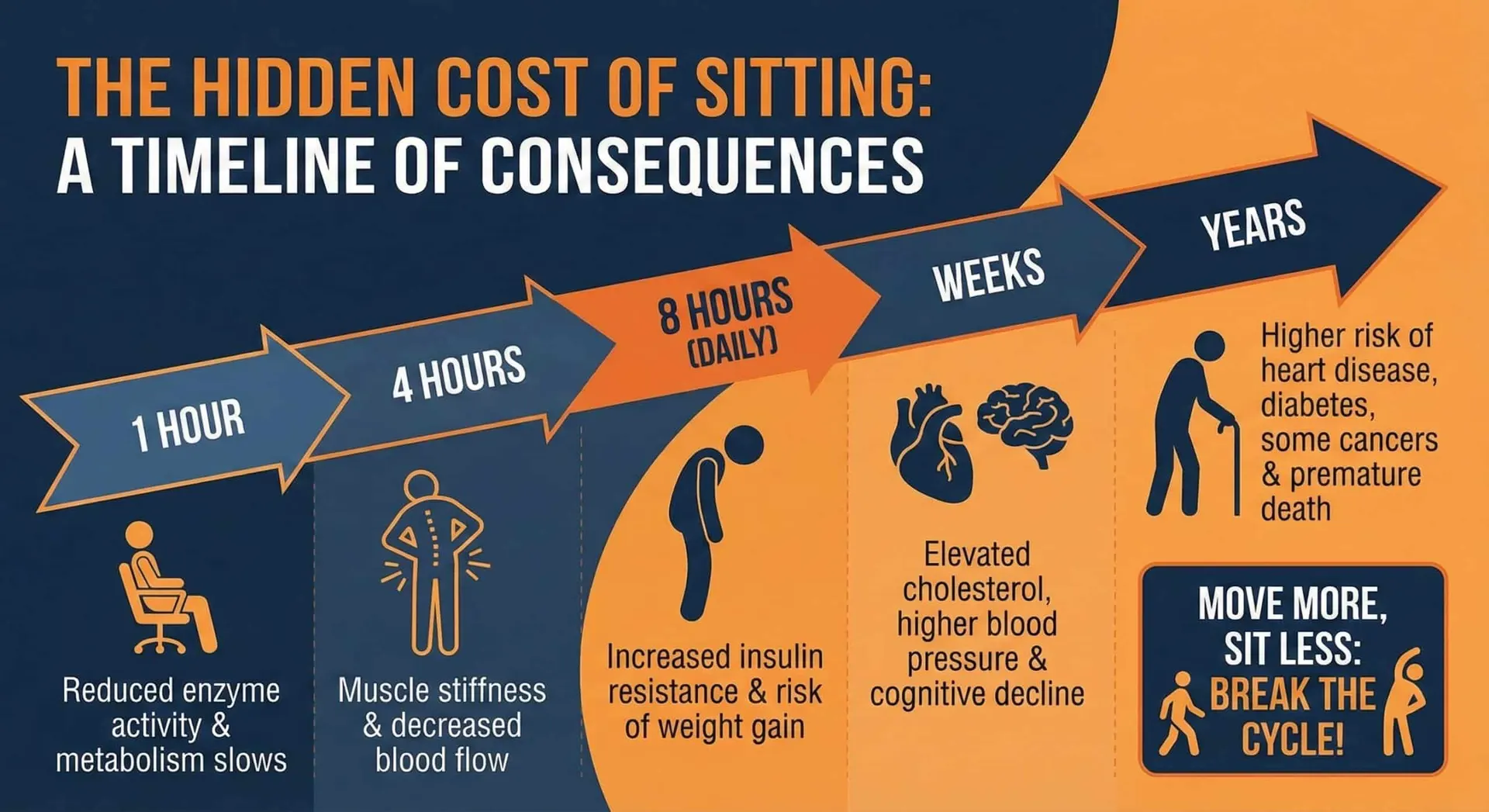
To counteract this, organisations must champion a culture of movement. Simple, low-cost interventions can have a profound impact. Encouraging walking meetings, providing standing desk options, promoting regular stretch breaks, or even offering subsidised gym memberships or onsite yoga classes can re-energise the workforce. By making movement an integral part of the workday, companies can combat physical and mental fatigue, fostering a more vibrant, dynamic, and productive atmosphere.
Sleep and Performance: The Overlooked Factor
In a culture that often glorifies long hours and constant connectivity, sleep is frequently the first casualty. Yet, this sacrifice is profoundly counterproductive. Sleep is not a passive state of rest but a critical period of active brain maintenance, memory consolidation, and emotional regulation. A consistent lack of quality sleep is one of the most significant, yet overlooked, impediments to employee productivity.
Sleep deprivation impairs a vast array of cognitive functions. It dulls focus, slows reaction times, hinders creative thinking, and compromises complex decision-making abilities. A tired brain is more susceptible to distraction and emotional volatility, leading to poorer communication and collaboration within teams. Forward-thinking organisations are beginning to recognise that promoting good sleep hygiene is a crucial component of their wellness strategy.
Practical Wellness Interventions That Boost Output
Understanding the ‘why’ is crucial, but the ‘how’ is what drives results. Implementing practical, accessible wellness interventions is key to unlocking productivity gains. A one-size-fits-all approach is rarely effective; instead, a holistic strategy that offers a diverse menu of options is more likely to succeed. Consider these evidence-based interventions:
Mindfulness and Meditation Training: Offer structured programs, like those provided by Mirosuna, that teach employees practical skills to manage stress and improve focus through guided meditation and mindfulness techniques.
Ergonomic and Movement Support: Conduct professional ergonomic assessments for all workstations. Introduce ‘movement-positive’ policies, such as scheduling 5-minute stretch breaks during long meetings or promoting stair use over elevators.
Comprehensive Mental Health Resources: Go beyond a basic EAP. Partner with providers to offer workshops on resilience, stress management, and mental health first aid. Ensure leaders are trained to recognise signs of distress and support their teams effectively.
Strategic Wellness Challenges: Design and run engaging, team-based wellness challenges that focus on holistic health, incorporating goals for movement, nutrition, mindfulness, and sleep. This fosters camaraderie and healthy habits.
By thoughtfully investing in our corporate wellness programs, you are not just offering benefits; you are building a high-performance culture rooted in the wellbeing of your people.
Measuring Productivity Gains from Wellness
To ensure executive buy-in and the long-term sustainability of your wellness strategy, it is essential to demonstrate its value in concrete business terms. Measuring the return on investment (ROI) from wellness initiatives involves tracking a combination of direct and indirect metrics over time.
Key HR Metrics: Monitor changes in rates of absenteeism, presenteeism (being at work but not fully productive), and employee turnover. A well-executed wellness program should lead to measurable improvements in all three areas.
Employee Engagement Data: Use regular pulse surveys and annual engagement surveys to track scores related to job satisfaction, morale, motivation, and perceived organisational support. Correlate these scores with participation in wellness programs.
Performance and Productivity KPIs: Where possible, link wellness initiatives to specific business outcomes. This could be an increase in sales figures, a reduction in error rates in a production environment, or faster project completion times.
By systematically collecting and analysing this data, you can move the conversation about wellness from a cost centre to a strategic investment, building a powerful, data-driven business case for its profound impact on productivity.
Need to prove the value to leadership? Download our free template to help you calculate the potential ROI of your wellness initiatives based on key HR metrics.
Ready to transform your workplace with evidence-based wellness programs? Contact Mirosuna today to discuss how we can support your team’s wellbeing.
Frequently Asked Questions About Wellness and Productivity
Wellness programs improve productivity by directly addressing the physiological and psychological barriers to peak performance. By reducing stress (cortisol levels), improving cognitive function through better sleep and increased blood flow from movement, and sharpening focus via mindfulness, employees are physically and mentally better equipped to execute deep work, solve complex problems, and collaborate effectively.
While results vary by industry and implementation, studies consistently show a positive return. The ROI is realized through various channels: reduced absenteeism (fewer sick days), lower healthcare costs, decreased rates of presenteeism (working while unwell and unproductive), and improved employee retention, which significantly lowers recruitment and training costs.
Meditation is essentially “attention training” for the brain. Regular practice strengthens the prefrontal cortex (the area responsible for executive control and focus) and improves its ability to regulate emotional responses. This enables an employee to better recognize distractions as they arise and quickly return their attention to the task at hand, rather than being derailed by every email notification or office noise.
Prolonged sitting places the body in a dormant state. It slows circulation, drops metabolic rate, and can lead to physical discomfort like muscle stiffness. This physiological slowdown results in mental fog, lethargy, and a significant drop in energy levels, particularly in the afternoon, making it difficult to maintain focus and high-quality output.