

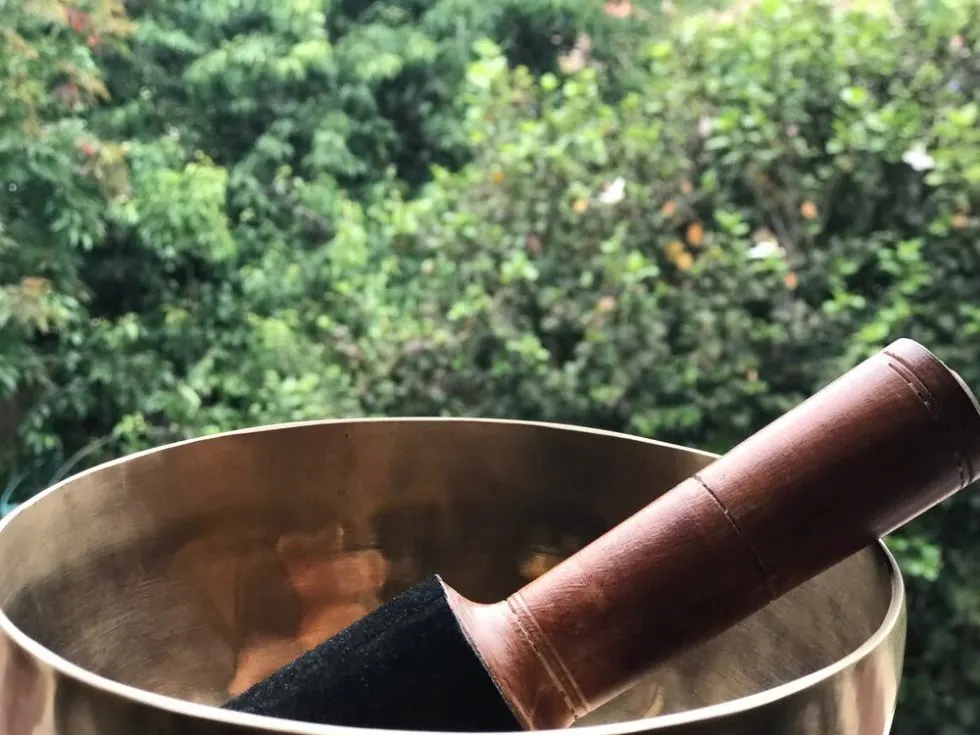
The short answer: choose a singing bowl based on what you will use it for, how far you will carry it, and whether you can trust the seller to send you a bowl that actually sings. Everything else, including the note, the size and the colour, comes after those three questions. I have helped hundreds of people choose bowls over the years, and the ones who regret their purchase almost always skipped one of them.
Singing bowls are the heart of every sound meditation I run at Mirosuna, so I have strong opinions about what makes a good one. Here is how I would walk a friend through the decision.
The three main types of singing bowl
Almost every bowl you will come across falls into one of three families.
Tibetan singing bowls
Tibetan bowls are the metal ones, traditionally made from an alloy of several metals and used for centuries in monasteries across the Himalayas. They range from tiny bowls that sit in your palm to bowls large enough to stand in. Their sound is warm, quiet and full of overtones, more of a hum than a ring.
Their biggest practical advantage is durability. You can carry a Tibetan bowl in a bag, knock it and it will still play. They are also the most affordable way to start. The catch is that quality varies, and a bowl with a hidden flaw can be hard to spot with an untrained ear. If you are buying your first metal bowl, the Tibetan singing bowl we sell in the studio is one I have chosen and played myself.
Crystal singing bowls
Crystal bowls are made from almost pure quartz that is heated to a very high temperature and formed into a bowl. They are the white frosted bowls you have probably seen in yoga studios. They are machine made, which means they can be tuned to a precise note, and they produce a loud, clear, sustained tone that fills a room.
Crystal bowls are the workhorses of most practitioners because they give you a lot of sound for the money. They are relatively easy to play and come in a wide range of sizes. They are also heavy and fragile. A crystal bowl that has been dropped is usually finished.
Alchemy crystal singing bowls
Alchemy bowls take the quartz base and fuse it with gemstones, minerals and precious metals such as gold, silver and platinum. Each one is unique, no two are identical, and they sit at the top of the price range. Their sound is layered and ethereal in a way that is hard to describe until you have sat in a room with one. I have written more about them in what are alchemy crystal singing bowls.
Three questions to answer before you buy
1. What is the bowl for?
A bowl for your own meditation at home has different requirements to a bowl you will play for a room of twenty people. A small Tibetan bowl on the bedside table is perfect for a two-minute pause before sleep. A large crystal bowl is what you want for group sessions. If you are interested in chakra work, you will care about specific notes. If you simply want a beautiful sound to settle your mind, the note matters far less than how the bowl makes you feel.
2. Will you be carrying it around?
Be honest about this. If your bowls will live in one room, fragility is a minor concern. If you plan to take them to clients, workplaces or outdoor events, weight and breakability become the deciding factors. Tibetan bowls travel beautifully. Crystal and alchemy bowls need padded cases and careful packing.
3. Can you trust the source?
This is the one people underestimate. I have seen plenty of bowls arrive with hairline cracks the buyer could not see, or tuned to a different note from the one on the listing. A cracked bowl will not sustain its tone and usually cannot be repaired.
Before you buy, inspect the inside and outside of the bowl for cracks, remembering that the natural marks on a hand-hammered Tibetan bowl are not damage. Listen to it played, in person if you can, and notice whether the tone sustains cleanly or wobbles and dies early. Buying online, ask for a recording and a clear returns policy.
Understanding notes and true tones
Bowls are often sold by note, usually one of the seven notes of the C major scale. Crystal bowls in particular can be made to a single precise note, which we call a true tone bowl. That matters if you want to play alongside other instruments, or if you are building a set and need the bowls to sit well together.
The seven notes are also traditionally matched to the seven main chakras, which is why many practitioners choose a set that covers the scale. A good consultant can work beyond those seven notes and help you find more complex tones that suit your purpose. When I am choosing a set for someone, I am listening for how the bowls sound together, not just one at a time, because a set that harmonises is what makes a sound meditation feel whole.
Setting a budget
Singing bowls range from an affordable first purchase to a serious investment, so decide your limit before you fall in love with something. Tibetan bowls are the most accessible, crystal bowls sit in the middle, and alchemy bowls command the highest prices. A consultant can help you get the most sound out of a fixed budget, which sometimes means fewer, better bowls.
When to get help choosing
For a single bowl for home use, trust your ear. For a set, or anything at the alchemy end of the range, I recommend working with someone who does this regularly. At Mirosuna we listen to what you are looking for, design a set of notes around it, and source the bowls, often having them custom made. We are in South Melbourne but consult by video with people all over the world and have bowls sent to their door.
If you want to go deeper than buying a bowl and learn to play for others, our Level 1 Singing Bowl Practitioner Training covers technique, set design and how to hold a room. And if you would like to hear the different bowls before you decide, the best place to start is simply to come and sit in a sound meditation at the studio. You can read about what to expect in the benefits of sound meditation.
Mirosuna, South Melbourne
Want to learn to play the bowls yourself?
Level 1: Singing Bowl Practitioner Training is a four hour, hands on morning with Alchemy Crystal, Crystal and Tibetan bowls. Ten people only. No prior experience or musical background is needed, and you receive a Certificate of Completion on the day.
- Sunday 22 November 2026, 9am to 1pm
- 4 hours, $420
- 18A Ross Street, South Melbourne
- Maximum 10 participants