

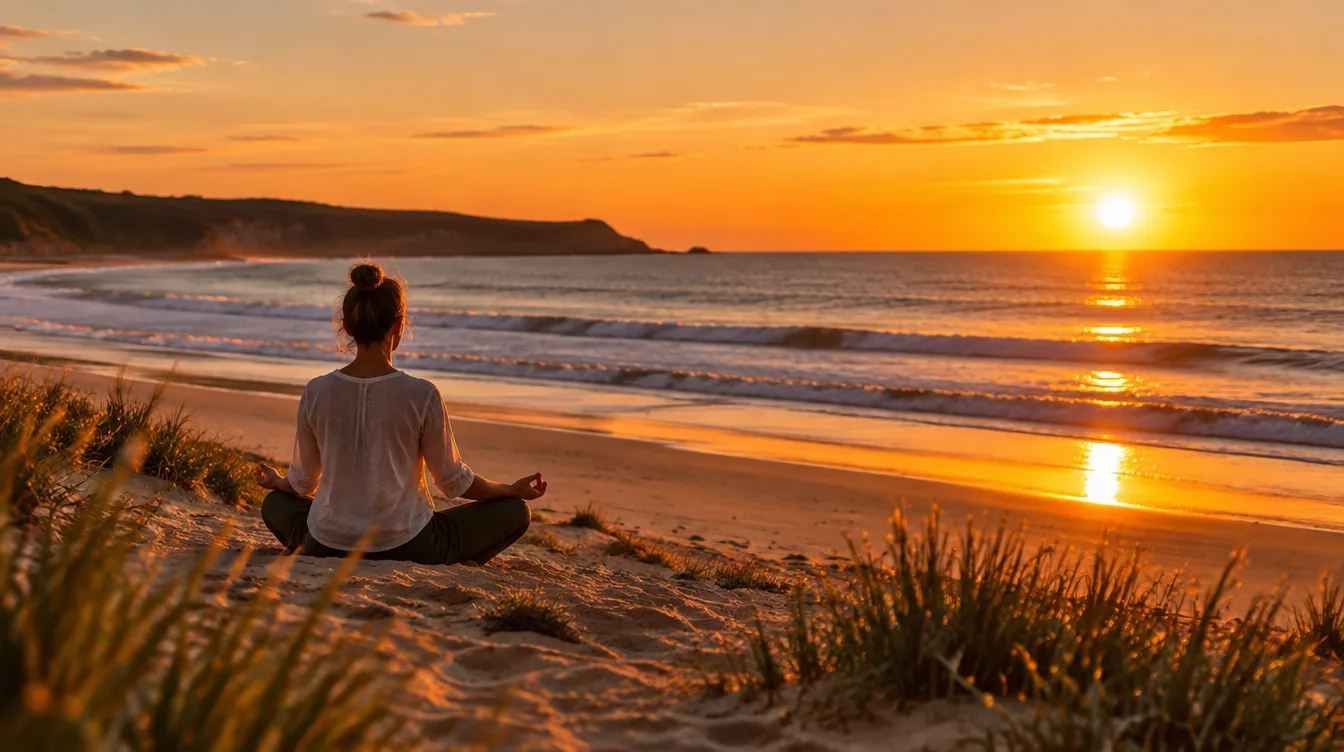
The summer solstice is the longest day of the year in Australia, a natural pause point at the peak of summer and at the end of a busy year. It sits right beside World Meditation Day, which makes it the perfect moment to slow down, reflect and set intentions for the year ahead. Here is when the 2026 solstice happens, what it means and some simple rituals to mark it.
When is the summer solstice in Australia in 2026?
The December solstice occurs at 20:50 UTC on 21 December 2026. In Australia, that is:
| Time zone | Date and time of the solstice |
|---|---|
| AEDT (Sydney, Canberra, Hobart and Victoria) | Tuesday 22 December, 7:50am |
| ACDT (Adelaide) | Tuesday 22 December, 7:20am |
| AEST (Brisbane) | Tuesday 22 December, 6:50am |
| ACST (Darwin) | Tuesday 22 December, 6:20am |
| AWST (Perth) | Tuesday 22 December, 4:50am |
Across the country, 22 December 2026 is the longest day of the year, with the most daylight hours. The further south you are, the longer the day: southern Australia gets well over 14 hours of daylight, while northern Australia sees much less difference across the year.
What the solstice means
The Earth is tilted on its axis. At the December solstice, the Southern Hemisphere is tilted most directly towards the sun, which gives us our longest day and shortest night. From here, the days slowly begin to shorten again until the winter solstice in June.
Cultures around the world have marked the solstices for thousands of years with festivals of light, fire and gathering. Many contemporary traditions treat the summer solstice as a time for gratitude, celebration and intention setting: a moment to notice how far you have come and what you want to carry into the new year.
World Meditation Day, 21 December
In December 2024, the United Nations General Assembly proclaimed 21 December as World Meditation Day, recognising the value of meditation for health and wellbeing. Falling the day before the solstice in Australia, it creates a natural two-day window to rest, reflect and reset before the Christmas rush.
Solstice rituals to try
- Watch the sunrise or sunset. Choose a beach, lookout or park with a clear view, and simply watch the light change.
- Join a sound bath. Sound meditation is a traditional way to mark a turning point. Keep an eye on our events for solstice sessions, or book a sound meditation.
- Set an intention. Write down one word or sentence for the year ahead and keep it somewhere you will see it.
- Take a gratitude walk. Walk slowly and name three things from the year that you are grateful for.
- Have a longest-day picnic. Gather friends outdoors and stay until the light is gone.
- Switch off. Put your phone away for the evening and let the day wind down naturally.
A simple solstice meditation you can do at home
- Sit comfortably, outside if you can, facing the light.
- Close your eyes and take five slow breaths, lengthening the exhale.
- Notice the warmth of the sun or the air on your skin.
- Bring to mind one thing from this year that you are proud of, and one thing you are ready to let go of.
- Silently set an intention for the year ahead in a few words.
- Rest for a few more breaths, then open your eyes slowly.
If you would like guidance, try our Morning Intention Meditation or the Tibetan Singing Bowl Sound Meditation.
Frequently asked questions
When is the longest day of the year in Australia in 2026?
The longest day is Tuesday 22 December 2026. The solstice itself occurs at 7:50am AEDT that morning.
Is the summer solstice on 21 or 22 December in Australia?
It changes a little from year to year. In 2026 it falls on 22 December across Australia because of the time difference from UTC.
When is World Meditation Day?
World Meditation Day is on 21 December each year. It was proclaimed by the United Nations in 2024.
Mark the longest day with rest
End the year with an hour of stillness. Book a sound meditation, or check our events for solstice and World Meditation Day sessions. Thank you for taking the time to pause.