

The practice of using sound for healing is not a new-age phenomenon. It’s an ancient practice, deeply rooted in cultures worldwide for thousands of years, from the didgeridoos of Aboriginal Australians to the chanting of Tibetan monks. But in our modern, evidence-driven world, what does the sound healing science say? How does a seemingly simple vibration or tone translate into profound physiological and psychological shifts? This article delves into the fascinating neuroscience behind sound healing, exploring how vibration affects the brain, reduces stress, and promotes a state of deep relaxation. For Australian businesses considering innovative approaches to employee wellbeing, understanding the science is key to appreciating the potential of practices like sound meditation.
The Ancient Practice Meets Modern Science
For centuries, cultures have intuitively understood the power of sound. Today, modern science is beginning to validate this ancient wisdom. Researchers are using advanced tools like electroencephalography (EEG) to measure brainwave activity, functional magnetic resonance imaging (fMRI) to observe brain activity, and blood tests to track hormonal changes, providing concrete evidence for the benefits of sound therapy. This growing body of research is demystifying sound healing, moving it from the realm of the mystical to the forefront of evidence-based wellness. It’s this scientific validation that makes it a compelling tool for corporate wellness, offering a secular, accessible, and effective way to manage stress and enhance focus in the workplace. The convergence of ancient traditions and modern neuroscience creates a powerful narrative, making these practices more acceptable and understandable for a corporate audience that values data and tangible outcomes.
How Sound Affects Brainwave States
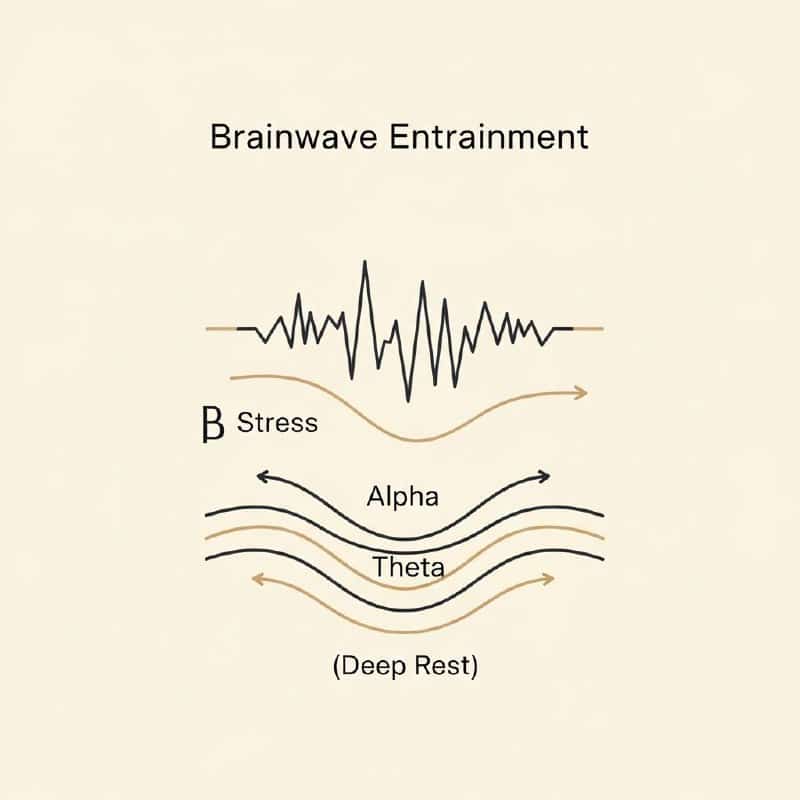
Our brains are constantly producing electrical activity, which can be measured as brainwaves. These waves are categorized into different states, each associated with a different level of consciousness and activity. Understanding these states is crucial to grasping how sound healing works.
- Beta (14-40 Hz): This is the state of our normal waking consciousness, associated with alertness, logic, critical reasoning, and problem-solving. It’s the state most of us are in during a busy workday.
- Alpha (7.5-14 Hz): A state of deep relaxation and passive awareness, often achieved during light meditation or when daydreaming. This state is associated with reduced stress and increased creativity.
- Theta (4-7.5 Hz): The state of dreaming sleep (REM) and deep meditation, associated with enhanced creativity, intuition, and emotional processing. This is often the target state for deep therapeutic work.
- Delta (0.5-4 Hz): The state of deep, dreamless sleep and the deepest states of meditation. This is when the body undergoes its most profound healing and regeneration.
The principle of entrainment is central to how sound healing works. This is the natural tendency for our brainwaves to synchronize with the frequency of a powerful, external stimulus, such as the rhythmic pulse of a drum or the resonant hum of a singing bowl. Through this process, sound therapy can gently guide the brain from a hyper-alert Beta state to the more relaxed Alpha and even the deeply restorative Theta states. This is one of the core sound therapy benefits, offering a direct and passive pathway to a meditative state that might otherwise take years of dedicated practice to achieve. For busy executives and employees, this offers a highly efficient method for mental reset and stress reduction.
The Vagus Nerve and Sound Vibration
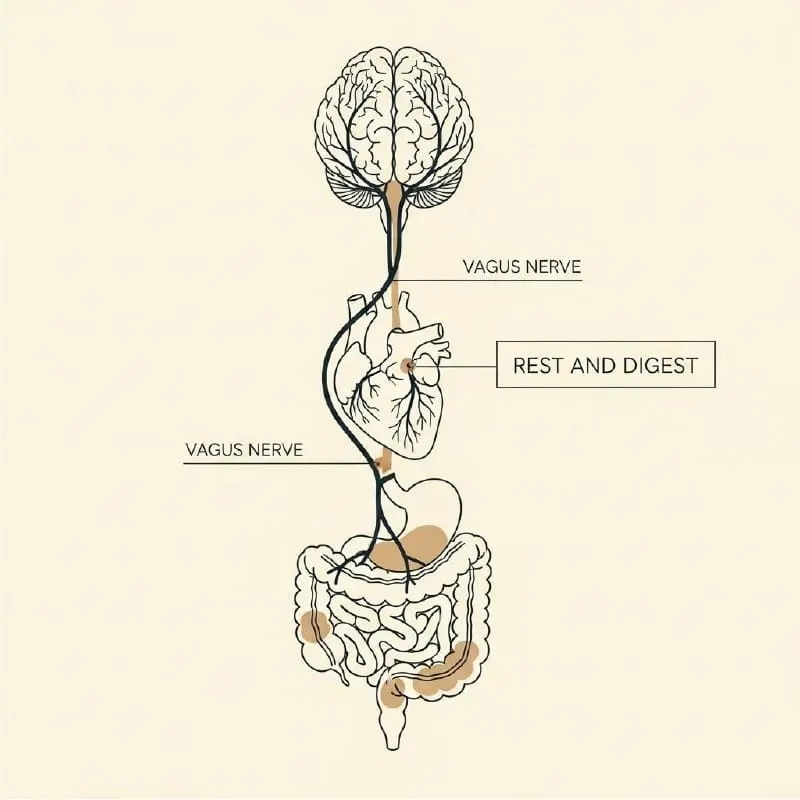
The vagus nerve is the longest cranial nerve in the body, acting as the superhighway of the parasympathetic nervous system, our “rest and digest” system. It wanders from the brainstem through the neck and chest to the abdomen, influencing the function of nearly every major organ. It plays a crucial role in regulating heart rate, digestion, and our emotional state. When we are stressed, our sympathetic “fight or flight” system is activated, preparing the body for perceived danger. Sound vibration, particularly low-frequency tones produced by instruments like gongs and crystal bowls, can stimulate the vagus nerve. This stimulation, known as vagal toning, helps to switch the body back into its parasympathetic mode, promoting relaxation, reducing anxiety, and creating a sense of calm and safety. This is a key aspect of how sound healing works, by directly influencing the body’s primary relaxation pathway and building nervous system resilience over time.
Cortisol Reduction: What Studies Show

Cortisol is often called the “stress hormone.” While essential for certain bodily functions, chronically elevated levels due to persistent stress can lead to numerous health problems, including impaired immune function, weight gain, and increased risk of chronic disease. Several studies have demonstrated the power of sound meditation and sound baths to significantly reduce cortisol levels. For instance, a 2016 study published in the *Journal of Evidence-Based Integrative Medicine* found that participants in a sound bath meditation reported significantly less tension, anger, fatigue, and depressed mood. The science behind sound baths is further supported by physiological data from this study, which showed a decrease in cortisol levels post-session. This scientific backing highlights their potential as a powerful stress-reduction tool within a corporate wellness framework. By offering experiences that measurably lower stress hormones, Mirosuna’s workplace wellness solutions are designed to leverage these benefits to create a more resilient, focused, and healthy workforce.
Heart Rate Variability and Sound Therapy
Heart Rate Variability (HRV) is the measure of the variation in time between each heartbeat. It is a critical indicator of our physiological resilience and behavioral flexibility. A high HRV is a sign of a healthy, well-balanced autonomic nervous system that can adapt effectively to stress. Conversely, a low HRV is linked to anxiety, depression, and an increased risk of cardiovascular disease. Research has shown that sound therapy, particularly using instruments with coherent and harmonic frequencies like singing bowls and tuning forks, can significantly improve HRV. By promoting a state of deep relaxation and stimulating the vagus nerve, sound helps to regulate the heart’s rhythm, leading to a more balanced and adaptable nervous system. This is another powerful data point illustrating the tangible health benefits of incorporating sound-based practices into a wellness strategy, contributing to long-term employee health and performance.
The Entrainment Effect: Synchronising Body and Sound
We’ve discussed brainwave entrainment, but the principle extends to the entire body. Our bodies are fundamentally rhythmic systems, from our heartbeat and breathing to our circadian rhythms and cellular vibrations. The concept of sympathetic resonance or entrainment suggests that the powerful, coherent vibrations of instruments like gongs and singing bowls can encourage our own bodily systems to synchronize with them. When our internal rhythms are chaotic or dysregulated due to stress, illness, or environmental factors, the external, stable frequency of a sound healing instrument can act like a powerful tuning fork, bringing our own systems back into a state of coherence and harmony. This is why a sound bath can feel like it reaches you at a cellular level, as every cell in the body is gently vibrated and “tuned” back to a state of optimal function.
Current Research and Future Directions
The field of sound healing science is vibrant and rapidly evolving. Current research is exploring its application for a wide range of conditions, including chronic pain, anxiety disorders, post-traumatic stress disorder (PTSD), and sleep disorders. With the increasing accessibility of sophisticated neuro-imaging technology, scientists are able to gain unprecedented insights into exactly how different frequencies and instruments impact the brain and body. The future of sound healing will likely involve more personalized and targeted approaches, where specific frequencies are used to address specific conditions or achieve particular goals. As the evidence base continues to grow, so too will the integration of sound therapy into mainstream healthcare and innovative corporate wellness programs. We are proud that our programs are at the forefront of this evidence-based movement, offering scientifically-backed solutions for modern workplace challenges.
Experiencing the Science for Yourself
While understanding the science is valuable for the analytical mind, the true, transformative impact of sound healing is best understood through direct experience. The feeling of a Tibetan singing bowl vibrating on your chest, the immersive and enveloping wash of a large gong, or the pure, clear tones of a crystal bowl can communicate more than words or data ever could. It’s a holistic experience that engages the body and mind on a primal, pre-verbal level, reminding us of our own vibrational nature. Providing employees with the opportunity to experience this firsthand is a powerful investment in their health, happiness, and productivity. It moves wellness from a concept to a felt reality.
Ready to transform your workplace with evidence-based wellness programs? Contact Mirosuna today to discuss how we can support your team’s wellbeing.