

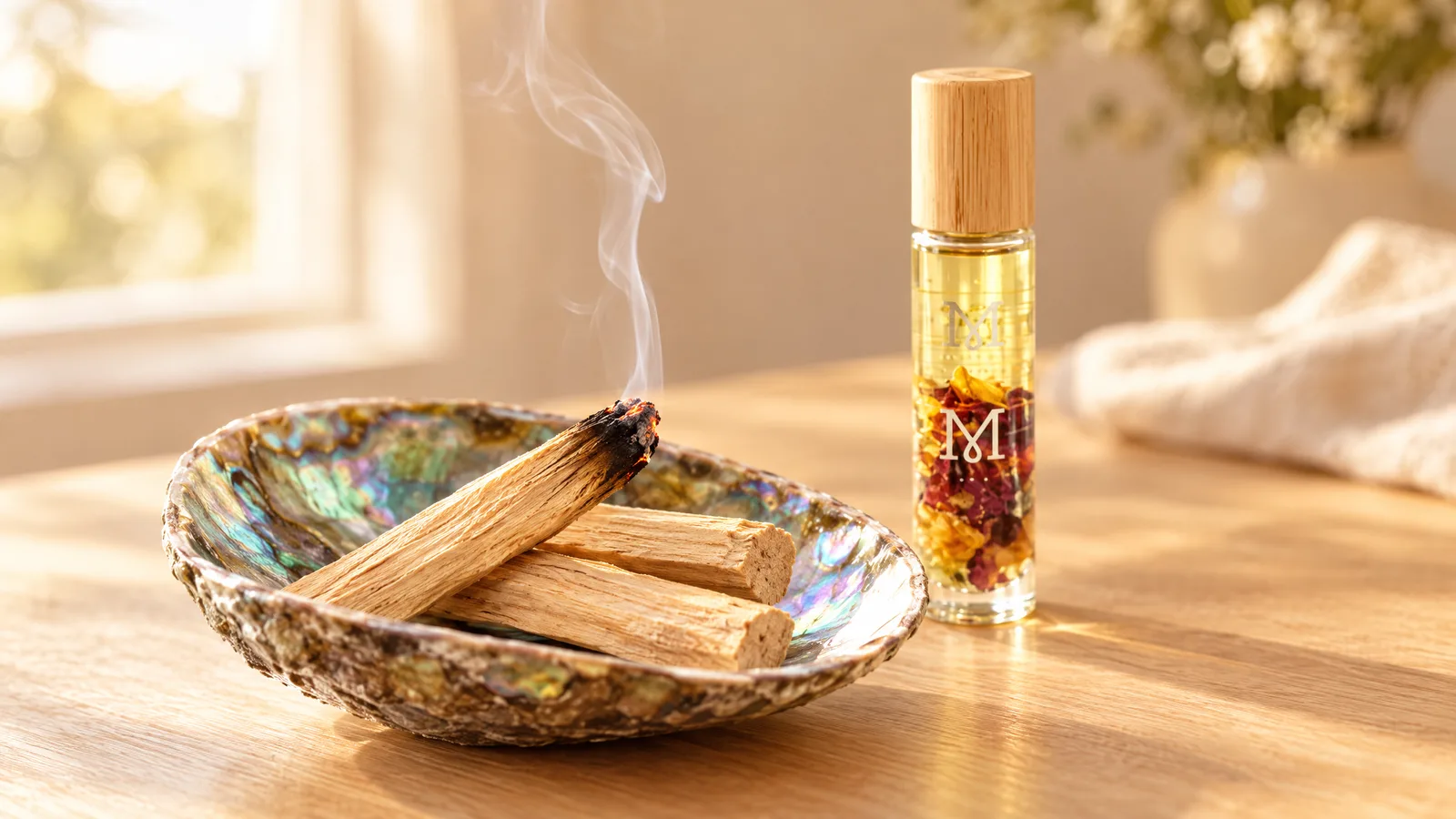
Palo santo is a pale, fragrant wood that many people light before meditation or yoga. Its smoke is sweet and woody, with a hint of citrus and mint. If you have seen the sticks in a studio or a gift shop and wondered what they are, this guide explains where palo santo comes from, why sourcing matters and how to use it well.
Quick answer: palo santo, Spanish for "holy wood", is the wood of the Bursera graveolens tree from the dry forests of South America. To use it, light the tip of a stick, let it flame for about 30 seconds, blow it out and let the smoke drift through the room. Choose sticks made from naturally fallen wood, and always burn it in a ventilated space on a heatproof dish.
What palo santo is
Bursera graveolens is a tree related to frankincense and myrrh. It grows in the dry tropical forests of Ecuador and Peru and further north into Central America. Once a tree dies and its wood has rested on the forest floor for several years, the natural oils in the wood develop into the warm, sweet scent palo santo is known for. That is why good palo santo comes from fallen wood, not freshly cut trees.
The wood has been used for centuries by communities in South America in ceremony and daily life. Its name, holy wood, reflects that long history.
Where palo santo comes from, and why sourcing matters
Demand for palo santo has grown quickly, and not every stick on the market is harvested with care. A few questions worth asking any seller:
- Is it naturally fallen wood? Ethical palo santo comes from trees that died naturally, not trees cut down for the trade.
- How long did the wood rest? Wood that has lain for several years has a fuller scent.
- Is there a replanting or restoration project? Good suppliers put something back into the forest.
The palo santo sticks sold at Mirosuna come from naturally fallen wood that has rested for four to ten years, and the supplier supports a forest restoration project.
How to use palo santo sticks
- Open a window. A little airflow keeps the smoke gentle.
- Light the tip. Hold the stick at a 45 degree angle over a candle or lighter.
- Let it flame for about 30 seconds, then gently blow it out.
- Let the smoke drift. Walk slowly around the room or simply set the stick down.
- Rest it in a heatproof dish. An abalone shell or ceramic bowl works well. The ember usually goes out on its own within a minute or two.
Please never leave a lit stick unattended, keep it away from children, pets and anything flammable, and avoid burning it if smoke bothers your breathing.
How to use palo santo spray
If you rent, work in an office or simply prefer not to burn anything, a spray gives you the scent without the smoke. The Palo Santo Cleansing Spray ($20) can be misted into the air before meditation, over a yoga mat or around a room at the end of the day. Please avoid spraying it near your face or onto fabrics that may mark.
Palo santo in a meditation practice
Scent is a simple way to mark the start of your practice. At Mirosuna, South Melbourne, palo santo is often lit as people arrive, so the room smells the same each time they sit. That familiar cue helps the mind recognise it is time to settle.
To try this at home:
- Choose one spot for your practice and keep it tidy.
- Light palo santo or use the spray as you sit down.
- Take three slow breaths while the smoke settles, then begin.
If you are starting from scratch, the Meditation Starter Pack ($99) brings together a journal, an essential oil roll-on, palo santo and an abalone shell. You can pair it with an oil applied the way our roll-on guide explains.
Palo santo sticks $21, Palo Santo Cleansing Spray $20. Ships Australia-wide. Thank you for supporting a small Melbourne studio.
Palo santo versus sage
| Palo santo | White sage | |
|---|---|---|
| Scent | Sweet, woody, a little citrus and mint | Herbal, earthy, sharper smoke |
| Smoke | Light, burns briefly | Heavier, burns longer |
| Sourcing | Best from naturally fallen wood | Wild harvesting has put pressure on native plants |
| Cultural context | Long history in South American traditions | Sacred to many Native American peoples |
| Smoke-free option | Palo santo spray | Few widely available |
Whichever you choose, it is worth learning a little about where it comes from and using it with respect.
Frequently asked questions
What does palo santo smell like?
Sweet and woody, with soft notes of citrus, mint and pine. The scent is lighter and warmer than most incense.
Is palo santo safe to burn indoors?
Yes, with care. Burn it briefly in a ventilated room, rest it on a heatproof dish and never leave it unattended. If you are sensitive to smoke, the spray is a gentler choice.
How long does a palo santo stick last?
Because you only burn it for a minute or so each time, one stick usually lasts for many uses, often weeks of regular practice.
Is palo santo endangered?
Bursera graveolens is not listed as endangered, but demand puts pressure on the forests where it grows. Choosing naturally fallen wood from a supplier that supports restoration is the responsible option.
Thank you for reading. If you have a question about using palo santo in your practice, please email hello@mirosuna.com.